PASTI
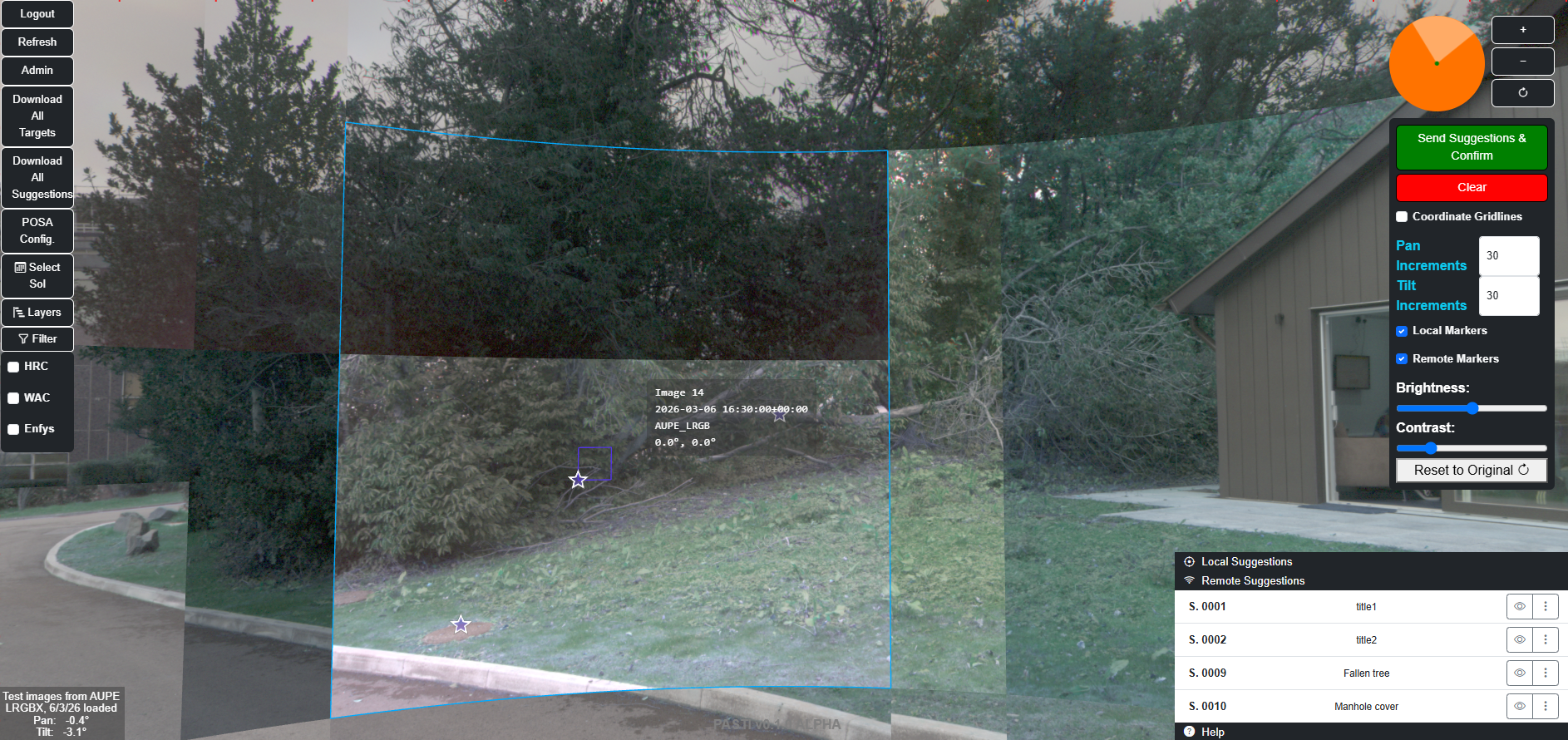
PASTI is a planning tool for scientists working on the ExoMars Rosalind Franklin rover, the European mission due to land on Mars and drill up to two metres underground to look for signs of past life.
A Mars rover can’t be steered in real time, because signals take many minutes to travel each way and contact windows are limited. Instead, each Martian day (“sol”) the rover sends back photos - mostly panoramas of its surroundings from its cameras. On Earth, the science team has a short window to study those pictures and decide what the rover should do next: which rock to look at closely, where to drive, what to photograph in more detail and where it might be worth drilling. Those commands are uploaded, the rover carries them out, and the cycle repeats.
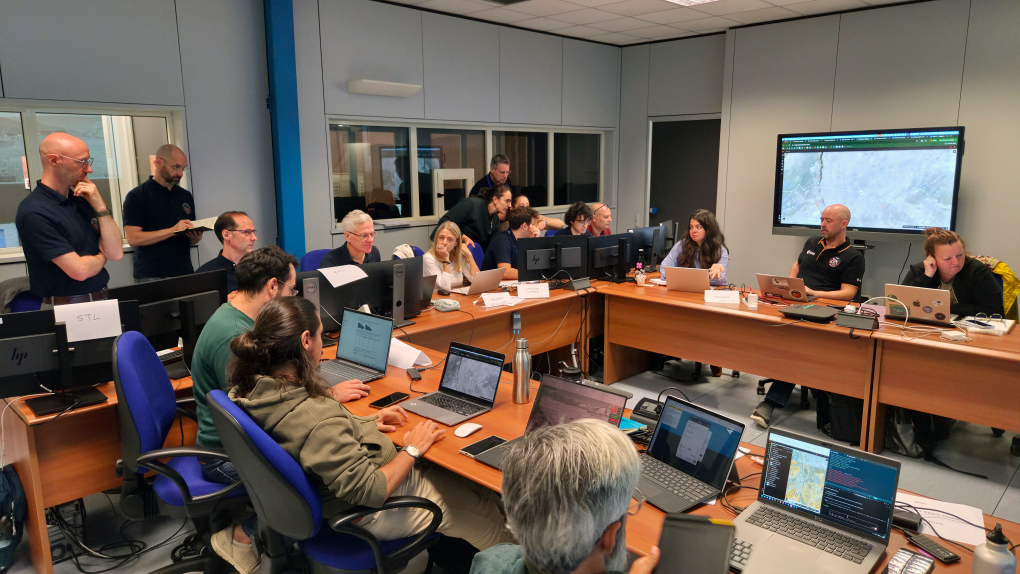
Pasti gives the team a single “space” to do this work. Every sol, new panoramas are loaded in and organised. Science team members can then log in and mark points of interest directly on the images, with each “suggestion” tagged with keywords and the scientist’s name. Everyone sees these marks as they are added, so they can discuss them easily. Special team members - the PanCam Operations Science Analysts, or POSAs - can then decide which suggestions become “targets” for further study.
PASTI is very much a collaborative development. The back-end and database structure was written by me, while the HTML and Javascript front-end (which does all the fancy 3D graphics) was written by my colleague James Cole at the Open University. The project as a whole is managed by Matt Balme at the OU, who is the deputy PI of the PanCam project (the rover’s main camera system).
Image source: European Space Agency